



Your value sits in expertise, trust and judgement. Yet expensive people still lose hours to intake, information gathering, repetitive correspondence and internal coordination.


The point is to understand where the work becomes harder, slower or more manual than it needs to be before deciding what technology belongs there.
High value people spend time on repeatable process work because the system around them is fragmented.
Key details arrive in different formats and have to be reorganised manually.
Useful information exists, but people still search across folders, inboxes and documents.
Routine explanations and updates consume attention.
Information is available but still needs manual compilation.
The goal is not to automate expertise. It is to make expertise easier to apply.
Click through three realistic examples. The conversation is only the visible layer. Behind it, the system is capturing context, following rules, moving information and knowing when a person should take over.
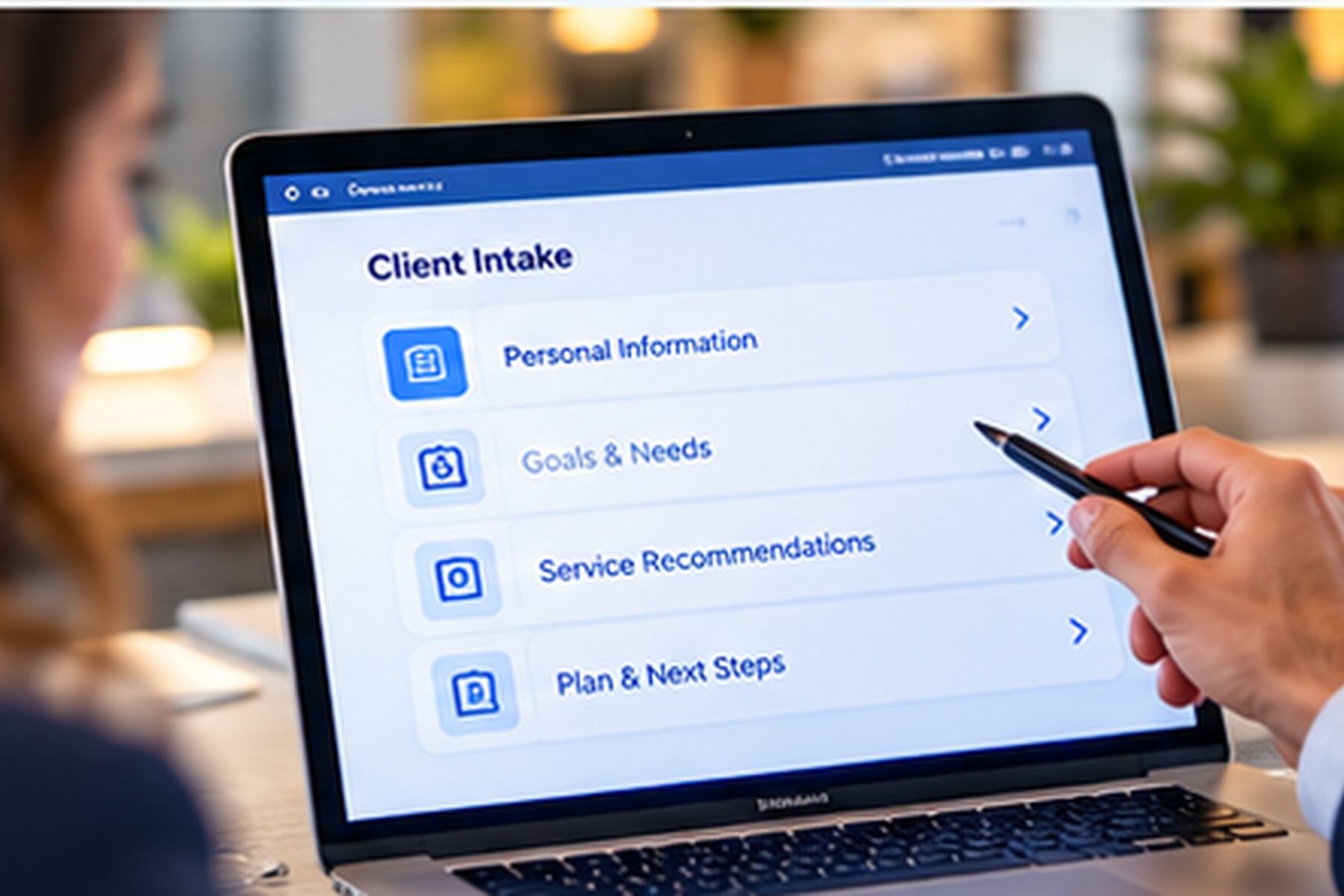
A new client submits a complex enquiry.
The request lands in a shared inbox and someone manually extracts key details before it can be assessed.
The system structures the intake, gathers missing context and routes a clean summary to the right person.
Information is cleaner and more complete, so professional time starts with what is needed rather than another round of admin.
A team member needs information buried across internal material.
They search folders, old emails and documents or interrupt someone who already knows.
An internal assistant retrieves relevant approved knowledge and points back to the source material.
Staff can locate the right source quickly while professional judgement stays with the person.
A routine client update needs to go out consistently.
Someone drafts the same type of update repeatedly and manually checks who needs it.
The system prepares the communication using the approved structure and flags anything requiring judgement.
The system prepares and routes the repeatable parts while the professional keeps control.
Specific operational problems, the kind of system we could build around them, and what would actually change for the business.


Bring us the part of the business that feels clunky, repetitive or harder than it should be. We will look at how the work actually moves, identify the strongest opportunity, and if it makes sense, design and implement the system around it.
We can talk through the workflow, what is happening now, and whether there is a smarter way to run it.
Book a ConversationTake the Health CheckA practical conversation about the workflow, the friction and what may be worth improving.